Communicate - Construct - Experiment - educate
Four Pillars of Amateur Radio Activity








Contact: kb7hta@kb7hta.com
NEWS
Las Vegas Valley T-Hunts Are Back
The next T-Hunt will be on November 21, 2026 and hosted by Ron, KJ7PAQ at ??? Park. For the results of past T-Hunts, latest information and a request form to be added to the T-Hunt mailing list click HERE
Las Vegas Mesh Group
IMPORTANT: Since the beginning of October, there has been and continues to be serious routing problems with the network, which makes it unreliable. Rick, K7FYI is looking into the problem and will advise us, when a solution is found and repairs have been made.
The next LV Mesh Group quarterly breakfast will be held on Saturday January 9, 2027. Let’s meet at Winchell’s Pub & Grill, 199 E Warm Springs Rd, Las Vegas, NV 89119 at 8:00 am; mark your calendars!
Rick, K7FYI has developed software to help evaluate our AREDN Mesh Network here in Las Vegas, using Prometheus that is imbedded into the node firmware. He has made a great YouTube video explaining its use. The video is unlisted, but a link has been sent out to all of the LV Mesh Group members.
Las Vegas Amateur Radio Balloon News
ALP40-K is being constructed and tested, with a launch planed for sometime in November 2026. Please see the table below for details.
The American Legion Amateur Radio Club Post 40 (TALARC) Balloon Launches
Small Super Capacitor Battery
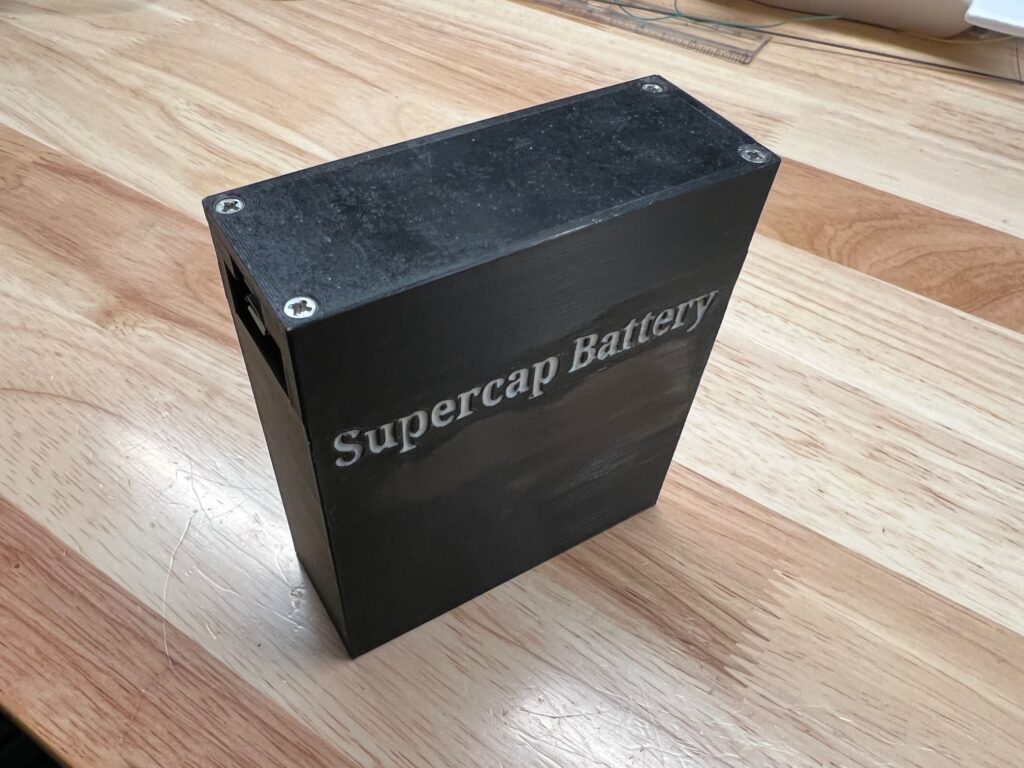
My objective was to build a small portable Super Capacitor Battery for charging an Android Phone or Tablet. The major components of the design are a 3D printed case, 3 x 4000 Farad 4.2 Volt Super Capacitors, USB C to 4.2 Volt battery charger, DC-DC converter and USB A connector. See the photo below.
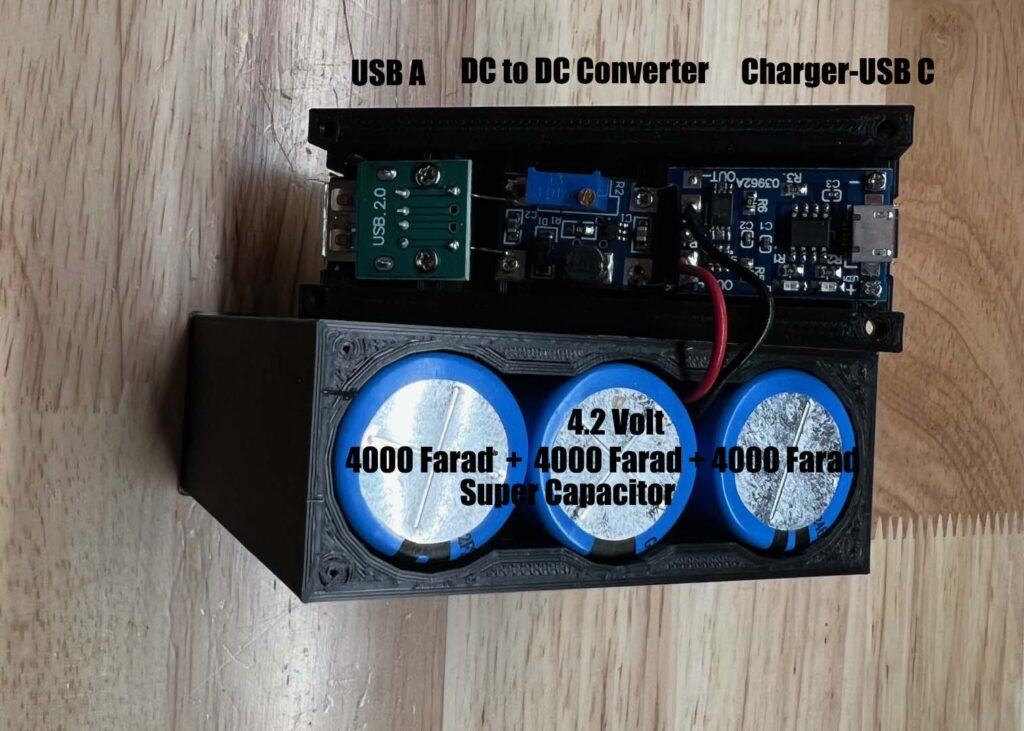
The Super Capacitor Battery in theory could output a regulated 5 Volts at 3 amps to the USB A socket. Most devices when charging are happy to get 5 Volts at 1 amp. Assuming this is true, the battery could supply one amp to the DC-DC converter for over 3 hours, with the voltage on the capacitors dropping from 4.2 Volts to 3.2 Volts. See the chart below.

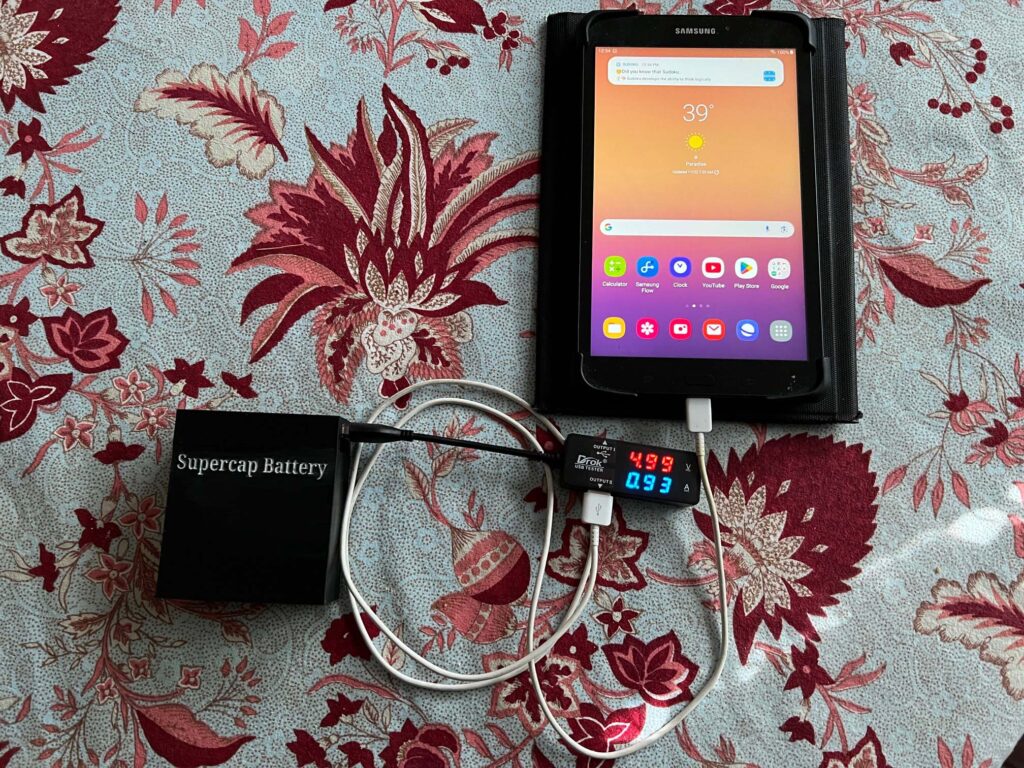
I have tested the Super Capacitor Battery by charging a Samsung Galaxy Tab A and a Samsung Z Flip 3 Phone. See the photo below. The battery seems to work well.
Further testing needs to be done to determine if the battery lives up to the theoretical calculations discussed above. Also, I would like to see if the battery would power a Raspberry Pi or Arduino Uno. Stay tuned.
Weekly LV Mesh Group NET
Every Sunday starting at 6:45 pm there is a NET using Team Talk 5 (similar to Zoom) over the LVMesh Network. If you would like to participate, please contact Tom, KB7HTA, for more information. His contact information is available through QRZ. The NET usually sees about 7 regulars, Frank (N7ZEV), Dale (WA6MZW), Robert (N7GET), Don (KE6BXT), Tom (KB7HTA), Steven (N6SFX) and Wayne (N7HWM), with others joining in periodically.
AllStar Over LVMesh
AllStar over LVMesh has been tested, with encouraging results. A private connection from the QTH of KB7HTA through the Apex repeater site, KO0OOO repeater site, Potosi repeater site and finally to the W7HEN public hub at the QTH of K6FYN was made during the Henderson Sunday night NET on October 4th, 2020. The AllStar over LVMesh private network consists of Richard, KO0OOO (node#1500), Tom, KB7HTA (node#1501), Rick, K7FYI (node#1502) and Lawrence, k6YFN (node#1503). A few hardware improvements need to be made before testing continues.
Mesh Power Box
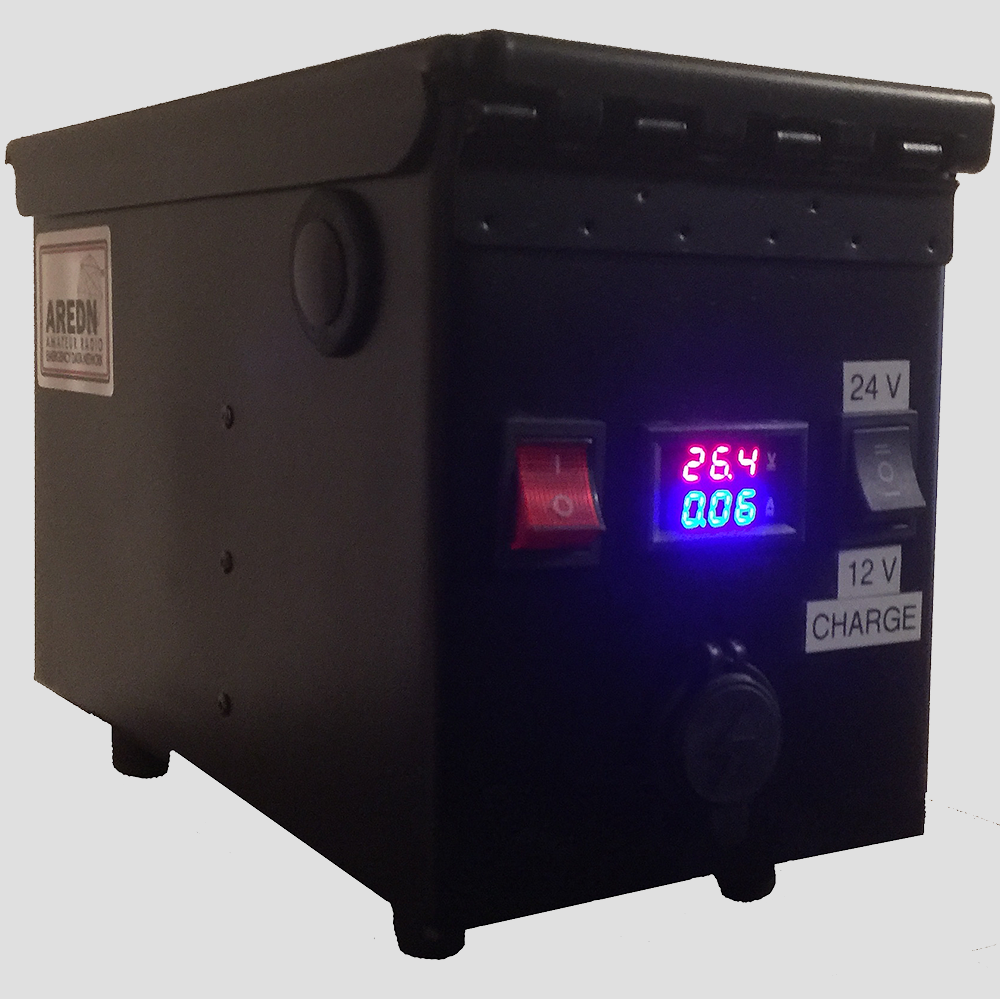
In working with mesh nodes, it was clear there was a need for a power box, which could supply both 12 volts and 24 volts. Even though, many nodes will operate using 12 volts, 24 volts is recommended. Also, the use of longer Ethernet cables, will drop the supply voltage significantly. In the “Projects” section, I have provided details on how to construct such a box.
Archived Articles
Lorem ipsum dolor sit amet, consectetur adipiscing elit. Ut elit tellus, luctus nec ullamcorper mattis, pulvinar dapibus leo.